Thus far, with rough and all un-able pen,
Our bending author hath pursued the story,
In small room confining mighty men,
Mangling by starts the full course of their glory.
Small time ...
Friday, June 27, 2008


Sunday, June 8, 2008
Reckless at Any Speech
One commenter over at Daily Kos pointed out this sentence in John McCain's trainwreck of a speech Tuesday night:
I don’t oppose a reckless withdrawal from Iraq because I’m indifferent to the suffering war inflicts on too many American families.While I would not characterize this sentence as a "major gaffe"—it's more like some loopy garden path sentence—(and this is, after all, John McCain, and the campaign has just begun), I somehow enjoy imagining, say, Dennis Steele in some ad, solemnly intoning:
John McCain: He said he was indifferent to the suffering that the Iraq War inflicts on many American families. And, therefore, he would not oppose even a reckless withdrawal from Iraq. John McCain. Reckless. Indifferent. That's not a leader we can believe in.One might have hoped for some attempt at an elegant syncrisis—I don't oppose X because Y; I oppose X because…—but, well, that might have raised the question of what sort of withdrawal John McCain could support or, perhaps, if he could support any type of withdrawal at all.
Tuesday, June 3, 2008
I know what it says, but what does it mean?

On the subject of rhetorical devices, here, by popular demand, is my vision of what the ultimate anti-McCain campaign ad would look like:
Actual news footage — McCain standing at the microphone, Joe Lieberman in the background.
MCCAIN: "Well, it’s common knowledge and has been reported in the media that Al Qaeda is going back into Iran and receiving training and are coming back into Iraq from Iran. That’s well known. And it’s unfortunate."
Lieberman steps forward, takes McCain by the arm, and whispers in McCain's ear.
MCCAIN: "I’m sorry, the Iranians are training extremists, not Al Qaeda."
The scene shifts; a child is in bed sleeping; in the background a phone is ringing.
NARRATOR: "It's 3:00 AM and your children are safely asleep. But somewhere in the White House a phone is ringing. Something is wrong in the world. Who's going to answer that phone?"
Still shot of Lieberman whispering in McCain's ear (above)
NARRATOR: "What if it's John McCain and Joe Lieberman isn't there to tell him what to say?"
Fade to text:
THE PRESIDENT OF THE UNITED STATES
NEEDS TO KNOW WHAT HE'S TALKING ABOUT
AS WELL AS WHAT HE'S SAYING.
Monday, May 26, 2008
A Free Press
In honor of Glenn's two most recent posts (here and here), I thought I'd post this little homily on the role of a free press in a democracy. While it may look like a handout for a ninth grade civics class, the source may surprise you.
A Free Press
In a democracy the press should operate free from governmental control. Democratic governments do not have ministries of information to regulate content of newspapers or the activities of journalists; requirements that journalists be vetted by the state; or force journalists to join government-controlled unions.
Yeah, well, you say, everyone should know this, and, yes, everyone should. This is basic ninth grade civics. But just run through these points and see how many our “free press” and our “democratic government” violate or ignore.
But what, you say, is the point in posting this if this is something everyone knows? The point lies not in the information itself, but in its source: http://usinfo.state.gov/products/pubs/principles/freepress.htm.
That's right, this little homily on the role of a free press in a democracy is part of the State Department's primer on democracy — what we preach to the rest of the world while at home the government assiduously goes about subverting and suborning the press. Yes, the same State Department that hires Blackwater, Inc. to massacre Iraqi civilians (or at least doesn't fire them when they do).
Well, you say, since the government and the press are supposed to be adversaries shouldn't the government try to subvert and suborn the press? The answer is, not in a democracy according to the USDOS. Consider the following quotations from the above: “Democratic governments grant journalists access to public meetings and public documents. They do not place prior restraints on what journalists may say or print” and “A democracy allows the press to go about its business of collecting and reporting the news without fear or favor from the government.”
Perhaps a little statement to the effect that “the press should expect the government will try to subvert and suborn it” would be a helpful warning to a press that seems to be so easily subverted and suborned.
So long as the press is willing to provide favorable coverage of the government in exchange for access, we do not have a free press or a democratic government. A democratic government is supposed to provide access to journalists regardless (“no prior restraints” and “without fear or favor”). The State Department says so (just not for domestic consumption).
And note particularly the final paragraph concerning the admission that “journalists in democracies are fully justified in pursuing such [national security] information” and compare that with the insistence of Billy Kristol that the NY Times be prosecuted for publishing national security information (that coincidentally revealed that the president of the US was a felon). Why has the State Department never explained to Billy Kristol the duties and responsibilities of the journalist in a democracy as they themselves promulgate them? Does no one in the State Department ever speak to Kristol?
[Sorry, I couldn't find any way to work language and grammar into this; someone else will have to do that.]
A Free Press
In a democracy the press should operate free from governmental control. Democratic governments do not have ministries of information to regulate content of newspapers or the activities of journalists; requirements that journalists be vetted by the state; or force journalists to join government-controlled unions.
- A free press informs the public, holds leaders accountable, and provides a forum for debate of local and national issues.
- Democracies foster the existence of a free press. An independent judiciary, civil society with rule of law, and free speech all support a free press. A free press must have legal protections.
- In democracies the government is accountable for its actions. Citizens therefore expect to be informed about decisions their governments make on their behalf. The press facilitates this “right to know,” by serving as a watchdog over the government, helping citizens to hold government accountable, and questioning its policies. Democratic governments grant journalists access to public meetings and public documents. They do not place prior restraints on what journalists may say or print.
- The press, itself, must act responsibly. Through professional associations, independent press councils, and “ombudsmen,” in-house critics who hear public complaints, the press responds to complaints of its own excesses and remains internally accountable.
- Democracy requires the public to make choices and decisions. In order for the public to trust the press, journalists must provide factual reporting based on credible sources and information. Plagiarism and false reporting are counterproductive to a free press.
- Press outlets should establish their own editorial boards, independent of government control, in order to separate information gathering and dissemination from editorial processes.
- Journalists should not be swayed by public opinion, only by the pursuit of truth, as close as they can get to it. A democracy allows the press to go about its business of collecting and reporting the news without fear or favor from the government.
- Democracies foster a never-ending struggle between two rights: The government’s obligation to protect national security; and the people’s right to know, based on journalists’ ability to access information. Governments sometimes need to limit access to information considered too sensitive for general distribution. But journalists in democracies are fully justified in pursuing such information.
Yeah, well, you say, everyone should know this, and, yes, everyone should. This is basic ninth grade civics. But just run through these points and see how many our “free press” and our “democratic government” violate or ignore.
But what, you say, is the point in posting this if this is something everyone knows? The point lies not in the information itself, but in its source: http://usinfo.state.gov/products/pubs/principles/freepress.htm.
That's right, this little homily on the role of a free press in a democracy is part of the State Department's primer on democracy — what we preach to the rest of the world while at home the government assiduously goes about subverting and suborning the press. Yes, the same State Department that hires Blackwater, Inc. to massacre Iraqi civilians (or at least doesn't fire them when they do).
Well, you say, since the government and the press are supposed to be adversaries shouldn't the government try to subvert and suborn the press? The answer is, not in a democracy according to the USDOS. Consider the following quotations from the above: “Democratic governments grant journalists access to public meetings and public documents. They do not place prior restraints on what journalists may say or print” and “A democracy allows the press to go about its business of collecting and reporting the news without fear or favor from the government.”
Perhaps a little statement to the effect that “the press should expect the government will try to subvert and suborn it” would be a helpful warning to a press that seems to be so easily subverted and suborned.
So long as the press is willing to provide favorable coverage of the government in exchange for access, we do not have a free press or a democratic government. A democratic government is supposed to provide access to journalists regardless (“no prior restraints” and “without fear or favor”). The State Department says so (just not for domestic consumption).
And note particularly the final paragraph concerning the admission that “journalists in democracies are fully justified in pursuing such [national security] information” and compare that with the insistence of Billy Kristol that the NY Times be prosecuted for publishing national security information (that coincidentally revealed that the president of the US was a felon). Why has the State Department never explained to Billy Kristol the duties and responsibilities of the journalist in a democracy as they themselves promulgate them? Does no one in the State Department ever speak to Kristol?
[Sorry, I couldn't find any way to work language and grammar into this; someone else will have to do that.]
Monday, April 28, 2008
Vapid is as vapid does
From KarenM in comments:
Good idea! Here's my list:
Vapid:
Anybody else?
Additions from comments (5/9/08):
Perhaps it's time for a post about synonyms for vapid?
Good idea! Here's my list:
Vapid:
| insipid | flat | lifeless | dull |
| boring | trite | banal | uninspiring |
| flavorless | tedious | listless | tiresome |
| spiritless | prosaic | unanimated | tasteless |
Anybody else?
Additions from comments (5/9/08):
| vacuous | tired | hackneyed | uninspired |
Thursday, April 24, 2008
Forcing vs. Pouring?
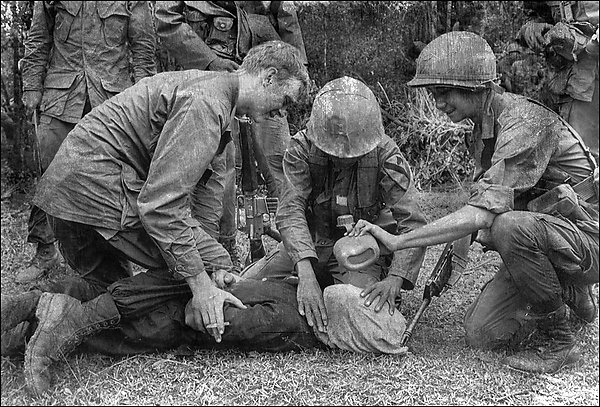
From a diary at Kos by Elsinora... transcript from Dan Froomkin's column
Ashcroft: "Now, listen here. You're comparing apples and oranges, apples and oranges. We don't do anything like what you described."
Elsinora: "I'm sorry, I was under the impression that we still use the method of putting a cloth over someone's face and pouring water down their throat. . . . "
Ashcroft: "'Pouring'! 'Pouring'! Did you hear what she said?: 'Putting a cloth over someone's face and pouring water on them.' That's not what you said before! Read that again, what you said before [about the Asano case]!"
Elsinora: "'The victim was bound or otherwise secured in a prone position; and water was forced through his mouth and nostrils into his lungs and stomach.'"
Ashcroft: "You hear that? You hear it? 'Forced'! If you can't tell the difference between forcing and pouring. . . . Does this college have an anatomy class?
If you can't tell the difference between forcing and pouring. . . . "
pour
v 1: cause to run; of liquids
2: move in large numbers; "people were pouring out
of the theater" [syn: swarm, stream]
3: pour out; of wines or sherry [syn: decant, pour out]
4: flow in a spurt; of liquids
5: supply in large amounts or quantities: "We poured
money into the education of our children"
6: rain heavily; "Put on your rain coat-- it's
pouring outside!"
[syn: pelt, stream, rain cats and dogs, rain buckets]
force
v 1: to cause to do through pressure or necessity, by
physical, moral or intellectual means :"She forced him
to take a job in the city" [syn: coerce, hale, pressure]
2: urge or force (a person) to an action; constrain or
motivate
[syn: impel]
3: move with force, "He pushed the table into a corner"
[syn: push] [ant: pull]
4: impose or thrust urgently, importunately, or inexorably;
"She forced her diet fads on him" [syn: thrust]
5: squeeze like a wedge into a tight space; "I squeezed
myself into the corner" [syn: wedge, squeeze]
6: force into or from an action or state, either
physically or metaphorically; "She rammed her mind into
focus"; "He drives me mad" [syn: drive, ram]
7: do forcibly; exert force; "Don't force it!"
8: cause to move along the ground by pulling; "draw
a wagon"; "pull a sled" [syn: pull, draw] [ant: push]
9: take by force; "Storm the fort" [syn: storm]
I guess if it will ease Ashcroft's mind semantically, we can agree on using some variation of forcibly pouring, or poured by force. However, the words and phrases emphasized above should have sufficed.
And, perhaps Knox College will, in future, make sure that the distinction between pouring and forcing is added to their anatomy curriculum. [/sarcasm]
And, perhaps Knox College will, in future, make sure that the distinction between pouring and forcing is added to their anatomy curriculum. [/sarcasm]
Definitions: http://dictionary.die.net/
Image: "Waterboarding in Vietnam," from Stop Torture: the Harvard anti-Torture Coalition
Image: "Waterboarding in Vietnam," from Stop Torture: the Harvard anti-Torture Coalition
Saturday, April 19, 2008
Elites and Elitism
Time to reclaim these words. They don't really sustain their proper meanings when applied, e.g., to our esteemed Press.
"Elites," as I understand the term, are the cream of the crop, those with expertise to share, and with verifiable discernment. Journalism's true elites are not those who think it is too difficult to do actual research, or that they merely have to present two opposing views, no matter the facts of the case, in order to be objective. Nor do they think that facts have a liberal bias, but rather understand they are simply based in Reality.
"Elites" may or may not belong to the uppermost income brackets. Although they often do, belonging to that bracket does not automatically confer "elitism" on a person; nor should it. Merit also counts.
"Elites," as I understand the term, are the cream of the crop, those with expertise to share, and with verifiable discernment. Journalism's true elites are not those who think it is too difficult to do actual research, or that they merely have to present two opposing views, no matter the facts of the case, in order to be objective. Nor do they think that facts have a liberal bias, but rather understand they are simply based in Reality.
"Elites" may or may not belong to the uppermost income brackets. Although they often do, belonging to that bracket does not automatically confer "elitism" on a person; nor should it. Merit also counts.
Subscribe to:
Posts (Atom)
